

Shipping MVPs without painting yourself into a corner
Scope ruthlessly, but protect boundaries: auth, data model seams, and observability hooks that let you grow without a rewrite at month six.
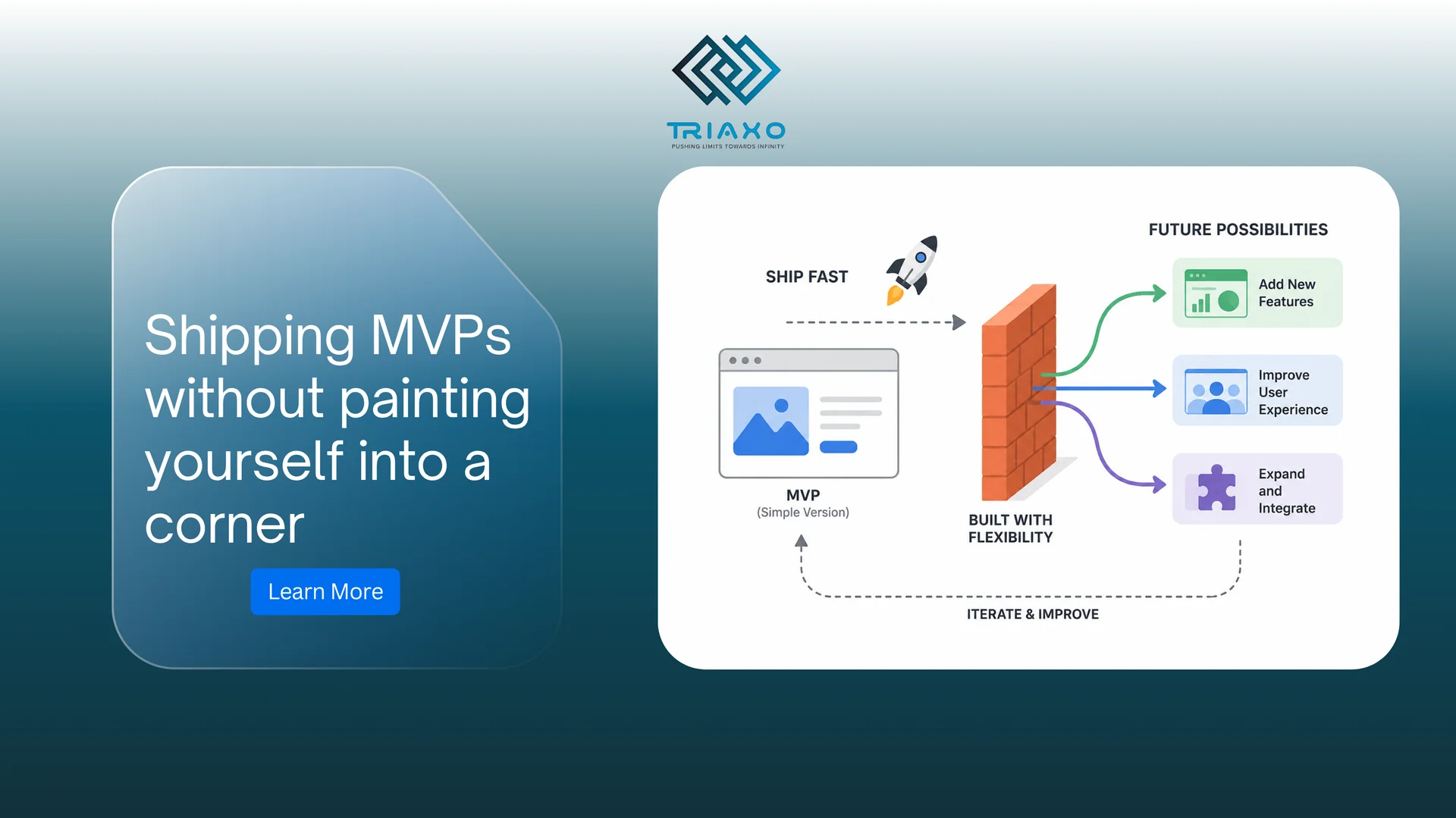
MVPs should disappoint on features, not on fundamentals. We have rescued products that shipped fast but entangled billing, auth, and core workflows in one untestable ball—rewrite quotes followed.
Cut features, not boundaries
A modular monolith with clear packages (billing, identity, core domain) beats microservices for most pre-PMF teams. You can extract services later along seams you already test independently.
- Identity provider or well-tested auth module from week one.
- Migrations as code; no manual prod edits.
- Structured logs with request IDs—even if dashboards come later.
- Feature flags for risky paths, not long-lived branches.
Data models need one level of foresight
You do not need every column for year three. You do need tenant IDs, audit fields, and soft-delete patterns if multi-customer SaaS is the bet. Changing those under live data is the expensive rewrite.
We timebox spikes for unknowns (payments provider, search stack) but cap their blast radius behind interfaces so swaps do not ripple through UI code.
Speed and sustainability trade off only when architecture is ignored. Ruthless scope plus disciplined boundaries is how teams hit dates without a rewrite quote at month nine.
Choose the smallest deployable unit
For many B2B MVPs, a modular monolith on a managed database and a single region is correct. Split services when independent scaling or team ownership is real—not because diagrams look mature.
Integrations on day one
Even MVPs touch email, payments, or SSO. Wrap vendors behind interfaces you control, store webhook events idempotently, and log external IDs on your core entities. Swapping Stripe for Adyen should not rewrite checkout UI.
Testing pyramid, not testing theater
- Unit tests on pricing and permissions logic.
- Contract tests on vendor adapters.
- A thin happy-path E2E suite in CI.
- Manual exploratory time for UX—not for verifying math.
Planning the second release
Document seams you expect to split later: reporting, notifications, admin. Keep admin behind feature flags. The second release is where MVPs die if the first cut glued everything into one controller.
Our MVP engagements end with a short architecture decision record (ADR) pack—what we optimized for, what we deferred, and what triggers the next structural change—so your team inherits context, not mystery code.
Recent Posts